Source Long Range UHF RFID Tag for Garment, Book, Jewelry
Compare 30 long range UHF RFID tag options from verified suppliers. These passive tags support ISO-18000-6C protocols and offer reading distances up to 30 meters for applications in garment, book, and jewelry tracking.
Key considerations
Products List




Comprehensive Sourcing Guide
Long Range UHF RFID Tag Sourcing Guide
Product Scope and Observed Listing Signals
The market for long-range UHF RFID tags presents a diverse array of hardware configurations, ranging from passive inlays to robust industrial readers and specialized smart cards. Current listing signals indicate a significant presence of passive UHF RFID tags, with specific models such as the Junmp A4015-3 and Junmp 2004 appearing in supplier catalogs. These products often feature standardized dimensions, such as 4015mm for inlays or 10626*5mm for more rigid formats, catering to varied attachment needs. The observed product count of thirty distinct items suggests a competitive landscape where buyers can choose between generic transparent or white labels and customized solutions, including those with specific chip selections and encoding capabilities.
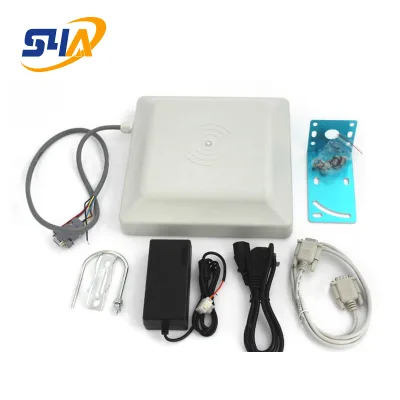
Beyond simple tags, the scope extends to complete reading systems and hybrid applications, including UHF RFID cards designed for smartcard, campus, and traffic applications. These cards often support protocols like ISO 14443A and are marketed for use in enterprise, hotel, and community security contexts. The presence of high-gain antennas and specific voltage requirements in some listings points to a segment of buyers seeking integrated reader-tag ecosystems rather than isolated components. Buyers must carefully distinguish between passive tags, which rely on reader energy, and active or semi-passive systems, although the current data heavily favors passive UHF solutions with reading ranges extending up to 30 meters in optimal conditions.
Technical Specifications to Verify
When evaluating long-range UHF RFID tags, the working frequency and supported protocol are the primary technical determinants of performance. Most UHF tags operate within the 902-928MHz range, adhering to standards such as ISO-18000-6B or ISO-18000-6C (EPC Global Class 1 Gen 2). Buyers should verify that the tag’s chip type aligns with their specific inventory management needs, as options typically include Read/Write capabilities for dynamic data updates or Read-Only configurations for permanent identification. The physical shape and material composition, such as Polypropylene (PP) substrates, also play a crucial role in determining how the tag interacts with different product surfaces, ensuring that the antenna design remains effective when attached to garments, books, or electronic devices.
Reading range and antenna gain are critical metrics for long-range applications, with some suppliers claiming stable ranges of 12 meters and maximums up to 30 meters under ideal conditions. However, these figures are highly dependent on the reader’s power output, antenna polarization, and environmental factors. Buyers must confirm the polarization type, such as horizontal polarization, and ensure compatibility with their existing reader infrastructure. Additionally, the recognition speed, which may be cited as exceeding 120km/h in high-speed logistics scenarios, requires verification against real-world throughput requirements. It is essential to request sample tags for testing, as free samples are often available, to validate performance in the specific operational environment before committing to large orders.
Compliance and Safety Documentation
Compliance with international radio frequency regulations is non-negotiable for UHF RFID equipment and tags. Buyers must ensure that all components, particularly readers and antennas, comply with regional spectrum allocations and electromagnetic compatibility (EMC) standards. While specific certification marks vary by destination market, the presence of ISO certification in supplier profiles indicates a baseline commitment to quality management systems. However, buyers should independently verify that the tags and readers meet local regulatory requirements for radio frequency emissions to avoid legal complications during deployment. Documentation should clearly state the frequency bands used and confirm that the equipment does not interfere with other critical communication systems.
Safety documentation extends beyond radio compliance to include material safety and environmental standards, especially for tags used in consumer-facing applications like garments or food packaging. Suppliers should provide Material Safety Data Sheets (MSDS) for the tag materials, such as PP or epoxy resins, to ensure they are non-toxic and safe for end-users. For tags intended for outdoor or harsh environments, waterproof and weatherproof ratings must be substantiated by test reports. Buyers should request evidence of these certifications rather than relying solely on marketing claims, ensuring that the products can withstand the intended operational conditions without degrading or posing safety risks.
Cost Drivers and Commercial Terms
The cost of long-range UHF RFID tags is influenced by several key factors, including the chip complexity, antenna design, and customization requirements. Basic passive tags with standard dimensions and read-only chips are generally more affordable, while custom-shaped tags with specific encoding, printing, or waterproofing features command higher prices. The observed price range of $0.01 to $290 USD reflects this disparity, covering everything from simple inlays to complete reader systems. Buyers should analyze the total cost of ownership, considering not just the unit price but also the efficiency gains from improved reading ranges and reduced manual labor in inventory processes.
Commercial terms such as Minimum Order Quantity (MOQ) and packaging details significantly impact procurement strategy. MOQs can range from as low as one piece for sampling to 10,000 pieces for bulk production, allowing flexibility for both pilot projects and large-scale deployments. Packaging is often standardized, with tags supplied in rolls of 2,000 pieces or cartons of 100 cards, but customized packaging options are available for specific logistical needs. Buyers should negotiate clear terms regarding sample availability, as free samples are commonly offered for testing, and clarify lead times and port of dispatch, which may include locations like Ningbo, Shenzhen, or Hong Kong, to accurately forecast delivery schedules.
Supplier Qualification and Quality Control
Selecting a reliable supplier for long-range UHF RFID tags requires a thorough assessment of their manufacturing capabilities and quality control processes. Buyers should prioritize suppliers who demonstrate a consistent supply ability, such as the noted capacity of 1,200 pieces per month for specific passive tag models, and who offer customization support for logos and packaging. It is crucial to verify the supplier’s origin, with many manufacturers based in regions like Guangdong or Ningbo in China, known for their electronics manufacturing ecosystems. Due diligence should include reviewing the supplier’s track record, customer feedback, and their ability to provide technical support for integration issues.
Quality control measures must be rigorously enforced to ensure tag performance consistency. Buyers should request detailed specifications for each batch, including chip lot numbers and antenna alignment tolerances. Implementing a robust incoming quality control (IQC) process is essential, where a random sample of received tags is tested for reading range, data integrity, and physical durability. Suppliers who offer free samples for testing demonstrate confidence in their product quality, but this should be complemented by formal quality agreements that define acceptable defect rates and procedures for handling non-conforming products. Establishing a clear communication channel for technical support ensures that any performance discrepancies can be addressed promptly.
Long-Term Procurement Checks
Long-term procurement success depends on the ability to scale operations and adapt to evolving technology standards. Buyers should monitor the supplier’s ability to maintain consistent quality and supply stability as order volumes increase. This includes verifying that the supplier can handle increased production demands without compromising on material quality or adherence to specifications. Regular audits of the supplier’s quality management systems and production facilities can help identify potential risks early and ensure that the partnership remains aligned with the buyer’s operational goals.
Technological obsolescence is a significant risk in the RFID sector, as standards and chip technologies continue to evolve. Buyers should ensure that their chosen tags and readers are compatible with future upgrades and emerging standards, such as advancements in EPC Gen 2 protocols. Maintaining a relationship with a supplier who offers ongoing technical support and product updates is vital for long-term viability. Additionally, buyers should periodically review their inventory management processes to identify opportunities for further optimization, leveraging the full potential of long-range UHF RFID technology to enhance efficiency and accuracy in their operations.
FAQs
What is the stable reading range for long range uhf rfid tag devices?
The stable reading distance is 12 meters, with a maximal range of up to 30 meters. This performance is achieved using horizontal polarization and an antenna gain of 12 dBi. The system operates on the 902-928MHz frequency band, ensuring reliable identification for applications requiring extended detection distances.
Can long range uhf rfid tags be customized for specific branding needs?
Yes, customization is available for these tags. Buyers can request customized logos and specific packaging options, such as 2000 pieces per roll. The chip type can also be chosen to suit particular application requirements, allowing for tailored solutions that align with specific operational or branding standards.
Which protocols do long range uhf rfid tags support for communication?
These tags support ISO-18000-6B and ISO-18000-6C (EPC G2) protocols. This compatibility ensures broad interoperability with various readers and systems. The tags are designed to handle high-speed recognition, with speeds exceeding 120 km/h, making them suitable for dynamic logistics and inventory tracking environments.
What is the minimum order quantity for purchasing long range uhf rfid tags?
The minimum order quantity ranges from 1 to 10,000 pieces, depending on the specific product model and supplier terms. This flexibility allows buyers to order small samples for testing or large batches for full-scale deployment. Customized packaging is also available to meet specific logistical requirements.
How much power do long range uhf rfid readers consume during operation?
The power consumption is 5W, operating on a 12VDC ± 10% voltage supply. This efficient power usage supports continuous operation in various environments. The devices are designed to maintain stable performance while minimizing energy costs, making them suitable for both portable and fixed installation scenarios.
Are long range uhf rfid tags waterproof and weatherproof?
Yes, these tags feature waterproof and weatherproof special features. This durability ensures reliable performance in outdoor or harsh industrial environments. The robust construction protects the internal components from moisture and environmental factors, maintaining data integrity and read accuracy over time.